
 Written by
Klaus-Michael Kühne had no children and lived in a Swiss canton with zero inheritance tax. When he died, his €42.2bn fortune passed tax-free into a decades-old charity, instantly making it one of the wealthiest foundations in Europe.
Logistics magnate and (formerly) Germany’s richest man, Klaus-Michael Kühne spent his life buying and rescuing companies on the downturn. It was a strategy that led him to build the world’s single most successful air and sea forwarder, Kühne+Nagel.

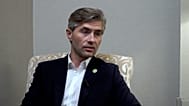




The death of Germany’s richest man creates one of Europe’s biggest foundations
Copyright Copyright 2008 AP. All rights reserved.By Una HajdariPublished on01/09/2026 – 15:32 GMT+2•Updated02/09/2026 – 5:56 GMT+2Add Euronews on GoogleListen to this article now…The death of Germany’s richest man creates one of Europe’s biggest foundations
Klaus-Michael Kühne had no children and lived in a Swiss canton with zero inheritance tax. When he died, his €42.2bn fortune passed tax-free into a decades-old charity, instantly making it one of the wealthiest foundations in Europe.
Logistics magnate and (formerly) Germany’s richest man, Klaus-Michael Kühne spent his life buying and rescuing companies on the downturn. It was a strategy that led him to build the world’s single most successful air and sea forwarder, Kühne+Nagel.
ADVERTISEMENT
Along the way, he also picked up significant stakes in three other transport giants, including Hapag-Lloyd, one of the world’s biggest container shipping lines, and Lufthansa, Germany’s flag carrier.
He also briefly owned a fifth of VTG, Europe’s largest private wagon-hire company, buying in for €160 million in 2016 and selling two years later for €300 million.
It turns out he had one more deal lined up, and he closed it the moment he passed away.